
What Are the Parents Like?

Plyawright:
Seigo Hatasawa
English translation:
Mari Boyd
Running time:
60–90 minutes
Number of Performers:
13
  1. The play is set in the conference room of a Catholic private girls junior high school in Tokyo. A group of parents has been called together: they are the parents of the bullies named in the suicide note left by a student who took her own life.
    Differing in age, background, and occupation, each parent spends the meeting doing nothing but trying to protect their own child for self-serving reasons. As tempers flare and voices are raised, the “true faces” of the parents are gradually laid bare through the bullying their children have committed.

  2. Plyawright:Seigo Hatasawa

    Seigo Hatasawa was born in Akita Prefecture in 1964. He is a playwright and director, and the founder and artistic director of the theatre company Watanabe Genshiro Shoten.
    In 2005 his play Ore no Shikabane wo Koete Ike won the Grand Prize in the Short Play Competition at the Japan Playwrights Association. He has written numerous commissioned works, including Nigero! Akutagawa for Bungakuza; What Are the Parents Like? and Innocent People for Theatre Company Subaru; hana 1970Koza ga Moeta Hi for Horipro; Haha to Kuraseba, the stage adaptation of the film Nagasaki: Memories of My Son, for Komatsuza; and Kamisama no Koi for Gekidan Mingei.
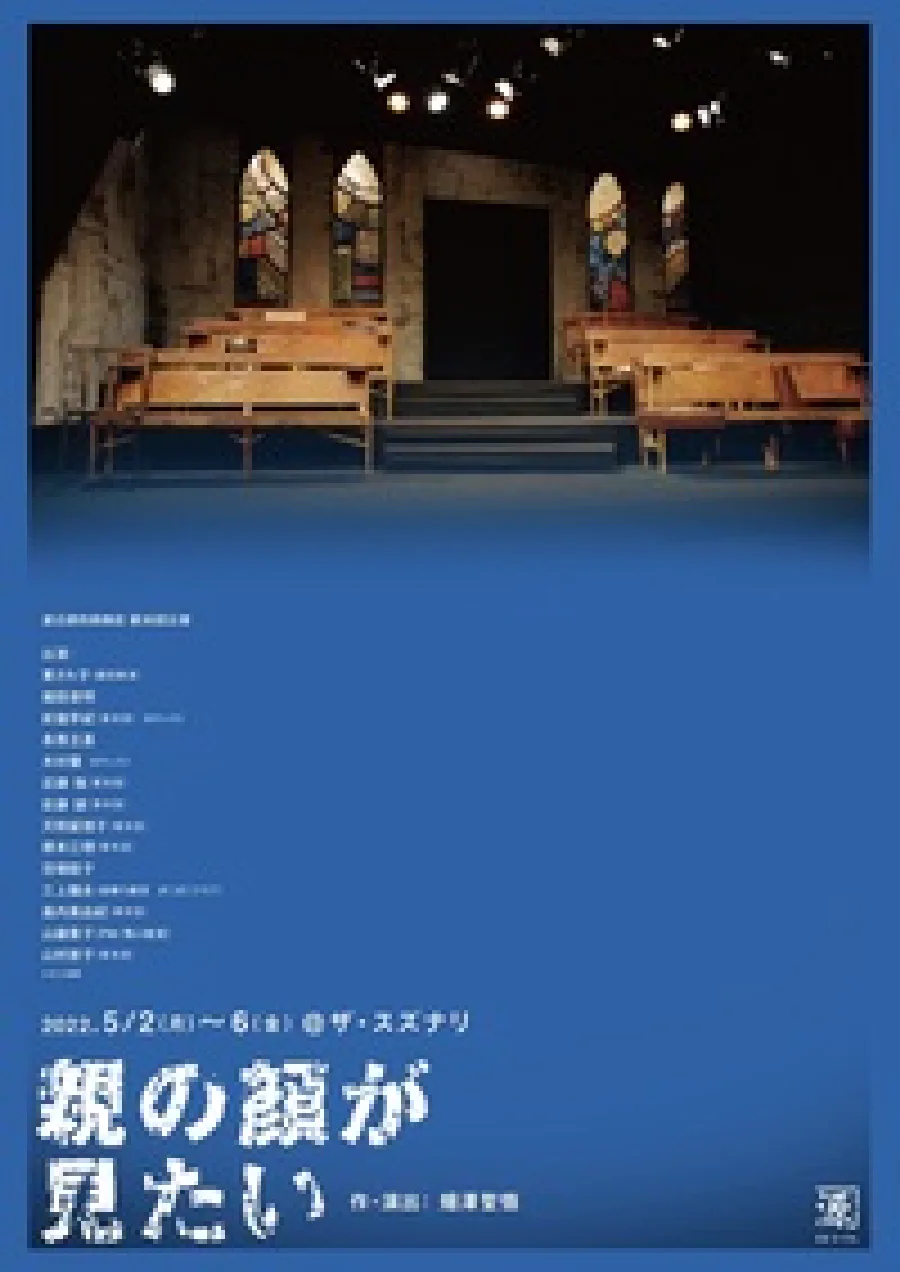
    What Are the Parents Like? was adapted into a feature film in South Korea in 2017. As a writer of radio dramas he has received many prizes, including the Grand Prize at the National Arts Festival (Agency for Cultural Affairs), the Galaxy Grand Prize, and the Japan Commercial Broadcasters Association Award.

    He is also a full-time public high-school teacher and advisor to school theatre clubs. The two schools, where he has coached have reached the National High School Drama Competition 13 times, winning the Grand Prize three times and the Excellence Prize eight times.

    English translation:Mari Boyd

    Mari Boyd is professor emeritus at Sophia University, Tokyo. Her research focus is modern Japanese theatre including performing objects and intercultural theatre. Her major publications are The Aesthetics of Quietude: Ota Shogo and the Theatre of Divestiture (Sophia University Press, 2006) and Japanese Contemporary Objects, Manipulators, and Actors in Performance (Sophia University Press, 2020). She has contributed chapters to various theatre publications, including “Modern Meta-patterns” in A History of Japanese Theatre (edited by Jonah Salz, Cambridge University press, 2016). Boyd has been a translation editor for the ten-volume Half a Century of Japanese Theater (Kinokuniya Shoten, 1999–2008) and ENGEKI: Japanese Theatre n the New Millennium (Japan Playwrights Association, 2016–25). She is an editor of E-Journal (Japanese Society for Theatre Research) and also sits on the Edo Marionette Theatre Youkiza’s board of trustees and the advisory committee of the Puppet International Research journal.

    • An English translation of his play Moshi Ita – Moshi Koko Yakyu no Joshi Manager ga Aomori no “Itako” wo Yondara is available under the title “MOSHI-ITA” What if the Manager of a High School Baseball Team Called in an Aomori Itako Shaman?
    • Moshi Ita – Moshi Koko Yakyu no Joshi Manager ga Aomori no “Itako” wo Yondara is also available in Korean translation.
    • Shugakuryoko is available in Korean translation.
  3. To stage, stream, or otherwise present any work made available on Playtext Digital Archives, you must obtain prior permission from the copyright administrator. Unauthorized use without the rights holder’s consent may be punishable under Japanese law.
    To request permission, please click the “Inquiry Form” button below and contact the Playtext Digital Archives Office, clearly stating the title of the work. We will forward your request to the copyright administrator.
Traces—on and on

Plyawright:
Yuko Kuwabara
English translation:
Mari Boyd
Running time:
Approx. 2–3 hours
Number of Performers:
13
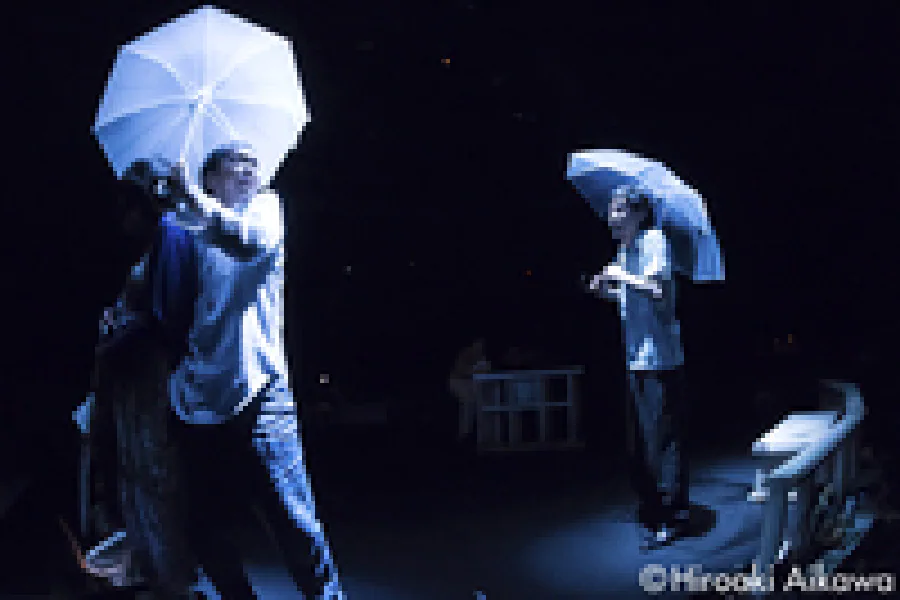
  1. On a stormy night by a river in flood, three incidents occur. A middle-aged man attempts to drown himself. A small boy is struck in a hit-and-run and falls into the river. The bartender who witnesses these events is hit by lightning and loses his sight in one eye. Eleven years later. The boy has been missing since the accident, and an official death certificate has already been filed. When his mother is diagnosed with cancer and realizes that her own time is limited, she decides to search for her son once more, together with a cameraman who works on documentary films.
    Meanwhile, a couple eagerly awaiting the birth of a baby returns to their hometown for the delivery. The wife does not know that her husband was the driver involved in a hit-and-run many years earlier.
    The man who once attempted suicide now works at a dry-cleaning shop and appears to be living a peaceful family life with his common-law wife and their son.
    Perpetrator, victim, witness—lives that should never have intersected again slowly converge over time and are set in motion once more.

  2. Plyawright:Yuko Kuwabara

    Born in Tokyo, Yuko Kuwabara is a playwright, director, and actor. She is the founder and artistic director of KAKUTA theatre company, and the artistic director of Toyohashi Arts Theatre PLAT. In 2009, her KAKUTA production Amai Oka received the New Artist Award at the 64th Agency for Cultural Affairs Arts Festival (Script and Direction). In 2016 her play Traces—on and on won the 18th Tsuruya Nanboku Drama Award. In 2018, Areno, produced by Toyohashi Arts Theatre PLAT, received both the 5th Hayakawa Higeki Kigeki Prize and the Yomiuri Prize for Literature (Drama and Scenario division). In 2019, her play Hitoyo (One Night), originally written for her theatre company KAKUTA, was adapted into a feature film directed by Kazuya Shiraishi. As a screenwriter she has also written for television, including the NHK Showa-kayō musical Mata Au Hi made.
    Her recent stage work includes Tawagoto, Sunset Men, and Gosan (as playwright and director), Lobby Hero (as director), and performances in A Cry from the City of Virgins, Senko Banashi, and Shibuya de Aimasho.

    English translation:Mari Boyd

    Mari Boyd is professor emeritus at Sophia University, Tokyo. Her research focus is modern Japanese theatre including performing objects and intercultural theatre. Her major publications are The Aesthetics of Quietude: Ota Shogo and the Theatre of Divestiture (Sophia University Press, 2006) and Japanese Contemporary Objects, Manipulators, and Actors in Performance (Sophia University Press, 2020). She has contributed chapters to various theatre publications, including “Modern Meta-patterns” in A History of Japanese Theatre (edited by Jonah Salz, Cambridge University press, 2016). Boyd has been a translation editor for the ten-volume Half a Century of Japanese Theater (Kinokuniya Shoten, 1999–2008) and ENGEKI: Japanese Theatre n the New Millennium (Japan Playwrights Association, 2016–25). She is an editor of E-Journal (Japanese Society for Theatre Research) and also sits on the Edo Marionette Theatre Youkiza’s board of trustees and the advisory committee of the Puppet International Research journal.

    • An English translation of Areno is available under the title Areno.
    • Subtitled versions of Areno exist in Chinese, English, French, and Spanish.
    • An English translation of Traces—on and on is available under the title Traces—on and on.

    English publication

    Her play Traces—on and on (translated by Mari Boyd) is included in:
    ENGEKI: Japanese Theatre in the New Millennium 3 (2018).

  3. To stage, stream, or otherwise present any work made available on Playtext Digital Archives, you must obtain prior permission from the copyright administrator. Unauthorized use without the rights holder’s consent may be punishable under Japanese law.
    To request permission, please click the “Inquiry Form” button below and contact the Playtext Digital Archives Office, clearly stating the title of the work. We will forward your request to the copyright administrator.

Love-No Filter

Plyawright:
Momoko Takeda
English translation:
Jeremy Kuhles
Running time:
90–120 minutes
Number of Performers:
5
  1. The play is set in the office of Tomita Shoten, a small katsuobushi (dried bonito) factory, nicknamed the “naya”. The factory is run by Kimiko, the second daughter of the Tomita family. Business is tough, and with the added blow of the COVID-19 pandemic, the very survival of the factory is in doubt.
    Her older sister Shiori, whose left arm is disabled, is nonetheless outgoing and charismatic. Having been compared to this sister all her life, Kimiko finds it hard to ask Shiori honestly for help.
    When the world came to a standstill because of COVID-19, some people—perhaps guiltily—felt a kind of relief. Kimiko was one of them. Now Shiori is determined to get the factory back up and running, reopening the rift between the sisters that never seems to close.
    At this point Kimiko encounters Isayama, a burglar who has broken into the office. She begs him to stab her.
    Living up to other people’s expectations can be exhausting. Sharing your life with people you can never completely understand can feel suffocating. And yet there is something precious about simply struggling on, day after day.
    Through the Hata dialect of Kochi Prefecture, the play portrays the raw, “no-filter” love of the people bound to this little factory.

  2. Plyawright:Momoko Takeda

    Momoko Takeda was born in Kochi Prefecture and began working as an actor in 2008. In 2018 she founded the theatre unit Babureru Riguru in order to create plays in Hata-ben, the local dialect of her hometown, Tosashimizu City in Kochi. In July of the same year she presented her first full-length play Hotaeru Hitora as the company’s inaugural production, and she has continued to create plays and comedy pieces in the Hata dialect on a regular basis.
    In 2020 her play Nijuichiji, Horaikan received the Best Script Award at the Kansai Theatre Festival, and in the same year Love―No Filter received the Japan Playwrights Association’s New Playwright’s Award. In 2022 her play Tanin won the Grand Prize at the “Nihon no Geki” Drama Award.
    She also actively provides scripts for other theatre companies. While dealing with universal worries and conflicts, her work maintains a light touch and is known for vivid character portraits and humor that makes audiences laugh in spite of themselves.

    English translation:Jeremy Kuhles

    A translator, writer, and editor, Jeremy Kuhles arrived in Japan in 2004 after graduating from the University of Exeter in the United Kingdom. In 2017, he translated Remote Backwater Island by Akihito Nakatsuru. His English version of the play, a powerful critique of the role of the government and media in the aftermath of the Great East Japan Earthquake in 2011, was performed in London in 2018 as part of the Ashita No Kaze / Winds of Change series. He joined onsite as a language consultant. As a freelance translator, he has worked with the Blue Note jazz trumpeter Takuya Kuroda and the UK fashion brand Fred Perry, among others. His localized tourism signage can be found all over Japan. As a subtitling instructor, he has taught workshops at universities in Japan and abroad, including SOAS University of London and Heinrich Heine University Düsseldorf in Germany. Since 2020, Kuhles has worked as an associate creative director at the Wild Tame creative agency in Tokyo.

    • An English translation of Ibishinai Ai is available under the title Love―No Filter.
      Her play Tanin is available in Korean translation.
  3. To stage, stream, or otherwise present any work made available on Playtext Digital Archives, you must obtain prior permission from the copyright administrator. Unauthorized use without the rights holder’s consent may be punishable under Japanese law.
    To request permission, please click the “Inquiry Form” button below and contact the Playtext Digital Archives Office, clearly stating the title of the work. We will forward your request to the copyright administrator.